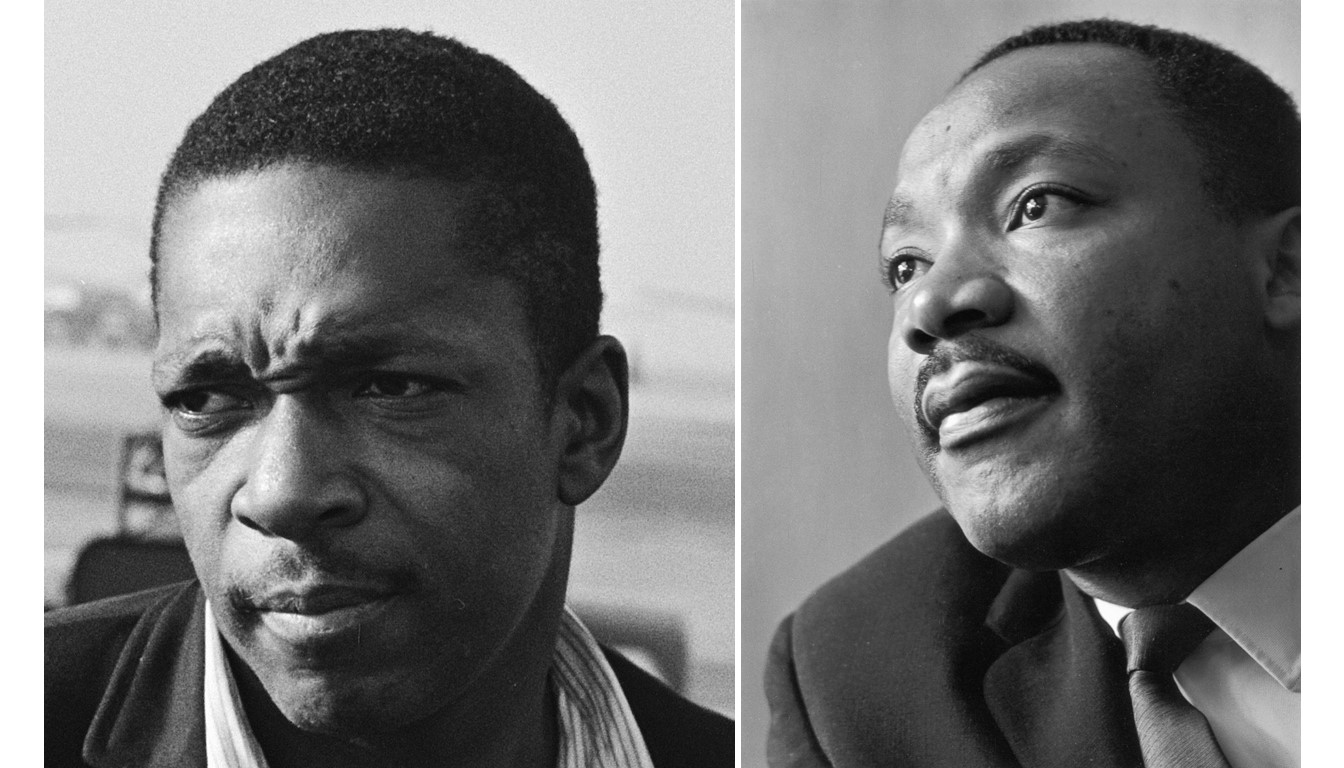
On the afternoon of November 18, 1963 John Coltrane went into Rudy Van Gelder’s Studio in Englewood Cliffs, NJ and recorded the tune Alabama. He did not tell anyone in the studio, including the members of his legendary quartet McCoy Tyner, Elvin Jones and Jimmy Garrison, what the tune was about. The band played five takes of the moving piece


A month later Coltrane’s quartet played Alabama on Ralph J. Gleason’s public television series, Jazz Casual:
The bombings were carried by Ku Klus Klan extremists and were a tipping point in the history of the movement. The tragic event is documented well elsewhere, one good reference here: About the 1963 Birmingham Bombing.


Martin Luther King addressed a crowd of mourners at the funeral service for Addie Mae Collins, Carol Denise McNair, and Cynthia Diane Wesley in the Sixteenth Street Baptist Church on September 18. A separate service was held for the fourth victim, Carole Robertson. He delivered a moving speech, a Eulogy for the Martyred Children. Coltrane may have had Martin Luther King’s eulogy in mind when performing Alabama. Both Coltrane’s music and King’s words are passionate and mournful, and lack bitterness and hatred. Similar to King’s speech where he transforms his message from mourning into determination for the struggle against racism, there is a point in the tune where Elvin Jones switches from a very quite accompaniment into a crescendo of toms and cymbals played with mallets.


The spiritual quest of Martin Luther King and John Coltrane led to mutual respect between the two leaders of their respective fields. While Coltrane was not known to express political views, his music and search of a higher spiritual place served the civil rights movement well. He played with the quartet at a number of benefit events for causes related to civil rights, such as a benefit for the civil rights periodical Freedomways on December 27, 1964. In an interview in 1966, Coltrane told Frank Kofsky: “Music is an expression of higher ideals … brotherhood is there; and I believe with brotherhood, there would be no poverty … there would be no war … I know that there are bad forces, forces put here that bring suffering to others and misery to the world, but I want to be a force which is truly for good.”

Martin Luther King appreciated Jazz as the heritage of black people’s music. In September 1964, as the guest of Mayor Willy Brandt, King spent two days in West Berlin and gave a speech at the Berlin Jazz Festival in which he said: “Jazz speaks for life. The Blues tell the story of life’s difficulties, and if you think for a moment, you will realize that they take the hardest realities of life and put them into music, only to come out with some new hope or sense of triumph. This is triumphant music. Modern Jazz has continued in this tradition, singing the songs of a more complicated urban existence. When life itself offers no order and meaning, the musician creates an order and meaning from the sounds of the earth which flow through his instrument. It is no wonder that so much of the search for identity among american Negroes was championed by Jazz musicians. Long before the modern essayists and scholars wrote of “racial identity” as a problem for a multi-racial world, musicians were returning to their roots to affirm that which was stirring within their souls.”
Here is the original recording of the tune from the session recorded on November 18 1963, released on the album Coltrane Live at Birdland:
If you enjoyed reading this article, you may also like another one about the intersecting history of jazz and the civil rights movement:


Leave a Reply