

What do two tombstones, a British actress, Alfred Hitchcock and two string quartets have in common? Read on…
Paul McCartney said that the name “Eleanor” came from actress Eleanor Bron, who had starred with the Beatles in the film Help!. “Rigby” came from the name of a store in Bristol, “Rigby & Evens Ltd, Wine & Spirit Shippers”, which he noticed while on location with his girlfriend at the time, Jane Asher, who was acting in the film The Happiest Days of Your Life.


In the 1980s, a tombstone with the name Eleanor Rigby was discovered in the graveyard of St. Peter’s Parish Church in Woolton, Liverpool. A few yards away, another tombstone had the last name “McKenzie” scrawled across it. Paul McCartney has conceded he may have been subconsciously influenced by the name on the gravestone. The real Eleanor Rigby lived a lonely life similar to that of the person in the song.


None of the Beatles played their instruments during the recording of the song, though John Lennon and George Harrison did contribute harmony vocals. An octet of studio musicians, comprising of 4 violins, 2 cellos, and 2 violas, performed a score composed by George Martin.
Compared to the song Yesterday, orchestrated lushly with legato notes, Eleanor Rigby is played with attacking staccato chords and melodic embellishments. For the most part, the instruments “double up”—that is, they serve as a single string quartet but with two instruments playing each of the four parts.
Martin cited the influence of Bernard Herrmann’s work on his string scoring from the 1960 film Psycho.

When Paul wanted the strings to sound “biting”, sound engineer Jeoff Emerick began thinking about how to accomplish that: “String quartets were traditionally recorded with just one or two microphones, placed high, several feet up in the air so that the sound of the bows scraping couldn’t be heard. I decided to close-mic the instruments, which was a new concept. The musicians were horrified!”
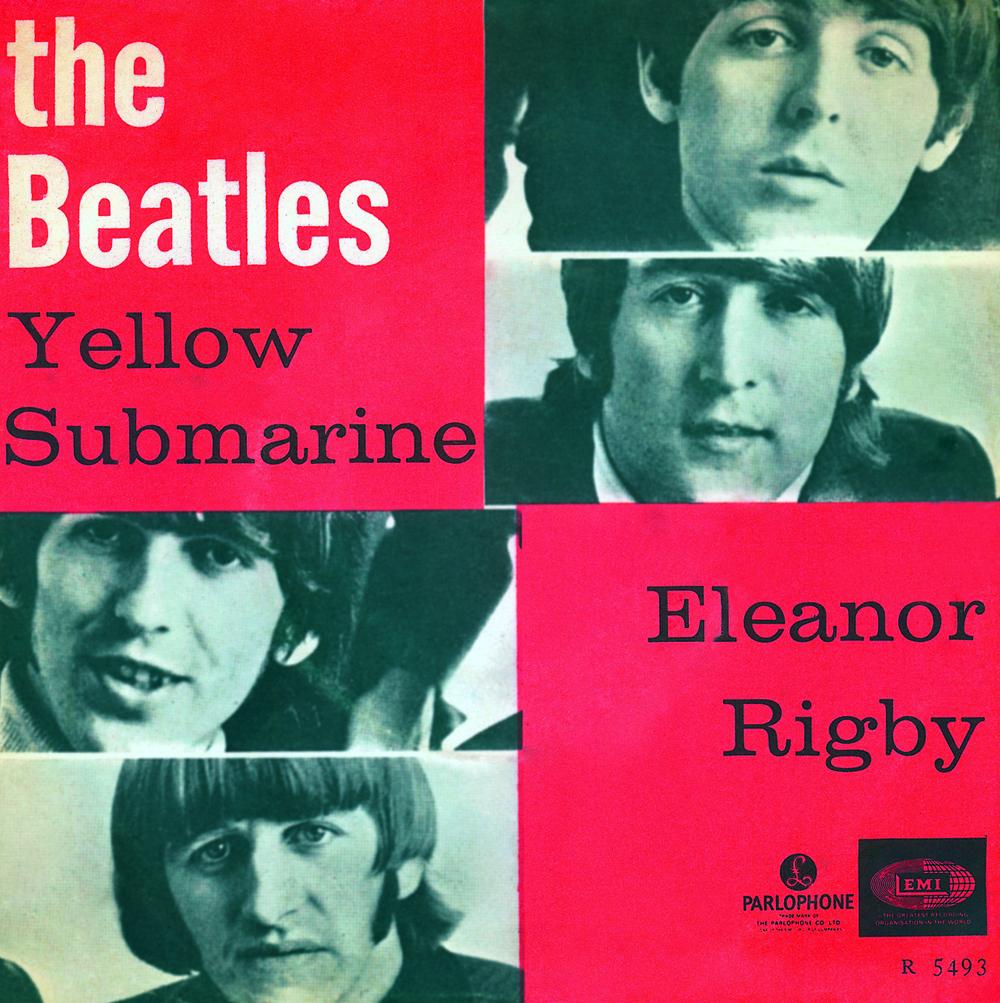
Eleanor Ribgy was released on August 5th 1966 simultaneously as part of the album Revolver and a double A-side single with “Yellow Submarine”, on Parlophone in the United Kingdom and Capitol in the United States. The song spent four weeks at number 1 on the British charts, and reached the eleventh spot in America.
Ah, look at all the lonely people
Ah, look at all the lonely people
Eleanor Rigby picks up the rice in the church where a
wedding has been
Lives in a dream
Waits at the window, wearing the face that she keeps
in a jar by the door
Who is it for?
All the lonely people
Where do they all come from?
All the lonely people
Where do they all belong?
Father McKenzie writing the words of a sermon that
no one will hear
No one comes near
Look at him working, darning his socks in the night
when there’s nobody there
What does he care?
All the lonely people
Where do they all come from?
All the lonely people
Where do they all belong?
Ah, look at all the lonely people
Ah, look at all the lonely people
Eleanor Rigby died in the church and was buried along with her name
Nobody came
Father McKenzie wiping the dirt from his hands as he walks from the grave
No one was saved
All the lonely people (Ah, look at all the lonely people)
Where do they all come from?
All the lonely people (Ah, look at all the lonely people)
Where do they all belong?


Leave a Reply